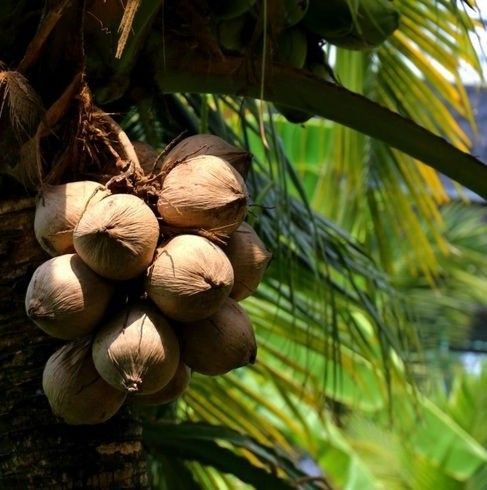
Although coconut prices have improved compared to the previous years, the saltwater drought and prolonged dry season have led to a decrease in coconut production in Ben Tre province, Vietnam leaving Vietnamese coconut farmers in a situation of having good prices but losing crops.
According to Mr. Dang Hoang Lam - Director of the Ben Tre Provincial Hydrological and Meteorological Observatory, 4% of salt water has infiltrated the province 42 - 50 km away from the estuary, and 1% salinity penetrated 53 - 75km away from the estuary. Salinity intrusion hurts the growth process of fruit trees, vegetables, and perennial crops, causing losses to farmers. Especially, coconut trees have been severely affected, resulting in a decrease in yield and impacting the lives of families here. Low productivity, with increased demand during the hot season, has pushed coconut farmers into a situation where they get good prices but lose crops.
Mr. Tran Anh Tuan - Chairman of the Coconut Association in Ben Tre Province, stated that there are approximately 79000 hectares of coconut cultivation in the province at the moment, accounting for about 40% of the country's coconut area. Among them, in some areas located on the Ham Luong River, the north of Mo Cay, Thanh Phu, Giong Trom, and Chau Thanh have been severely affected by saltwater intrusion.
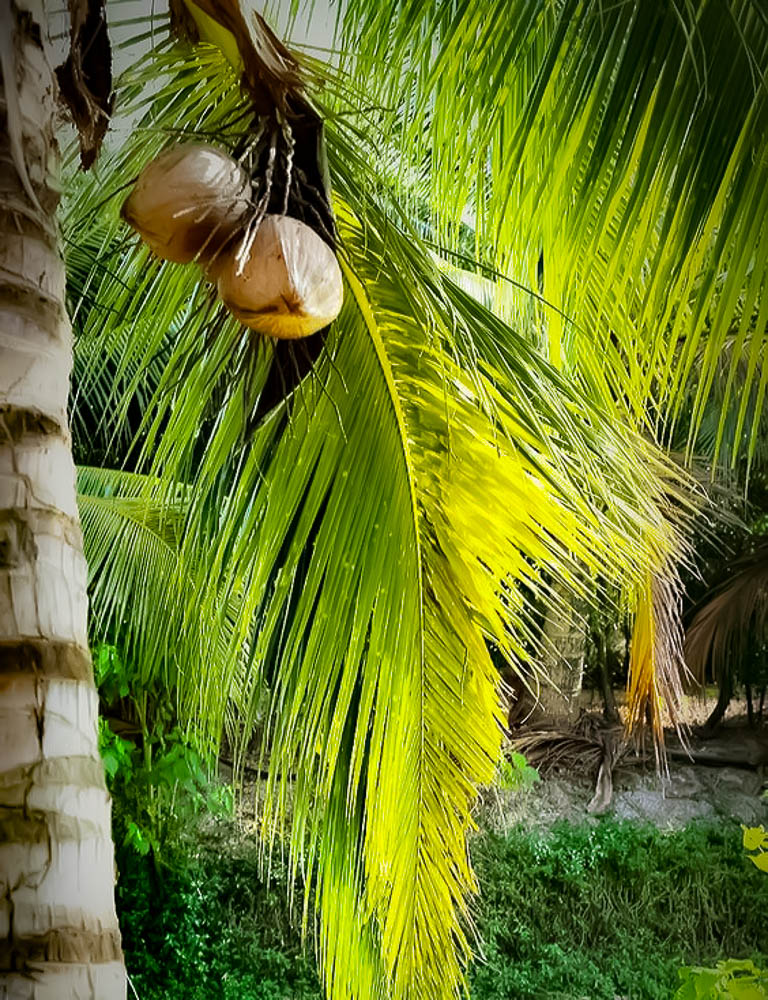
The impact of salinity intrusion on coconut trees is considerable, which lowers coconut yield.
Ben Tre Province is currently planting two main types of coconuts, industrial coconuts for processing products and coconuts for drinking. The Chairman of Ben Tre Coconut Association also said that although coconut prices are better than last year, because of the drought and salinity situation caused the province's productivity to decrease by more than 10% compared to the previous year.
According to Ms. Pham Thi Lin, a coconut farmer in Mo Cay Bac district (Ben Tre), saltwater intrusion will often cause dry fruits, shriveled fruits, failure of fruition, etc. reducing crop yields and negatively affecting the process. The lower growth process of coconut trees makes people's agricultural production difficult. In addition, in areas with extreme salinity, young coconut trees even die due to drought and too high soil salinity.
Mr. Nguyen Thanh Phong, a coconut-growing household in Giong Trom district, said that although saline drought was predicted, response measures have not been able to improve the current situation. The freshwater reserve is not enough for living and production use because this year's dry season is long, the weather is hot and the rate of soil salinity is also higher than in previous years.
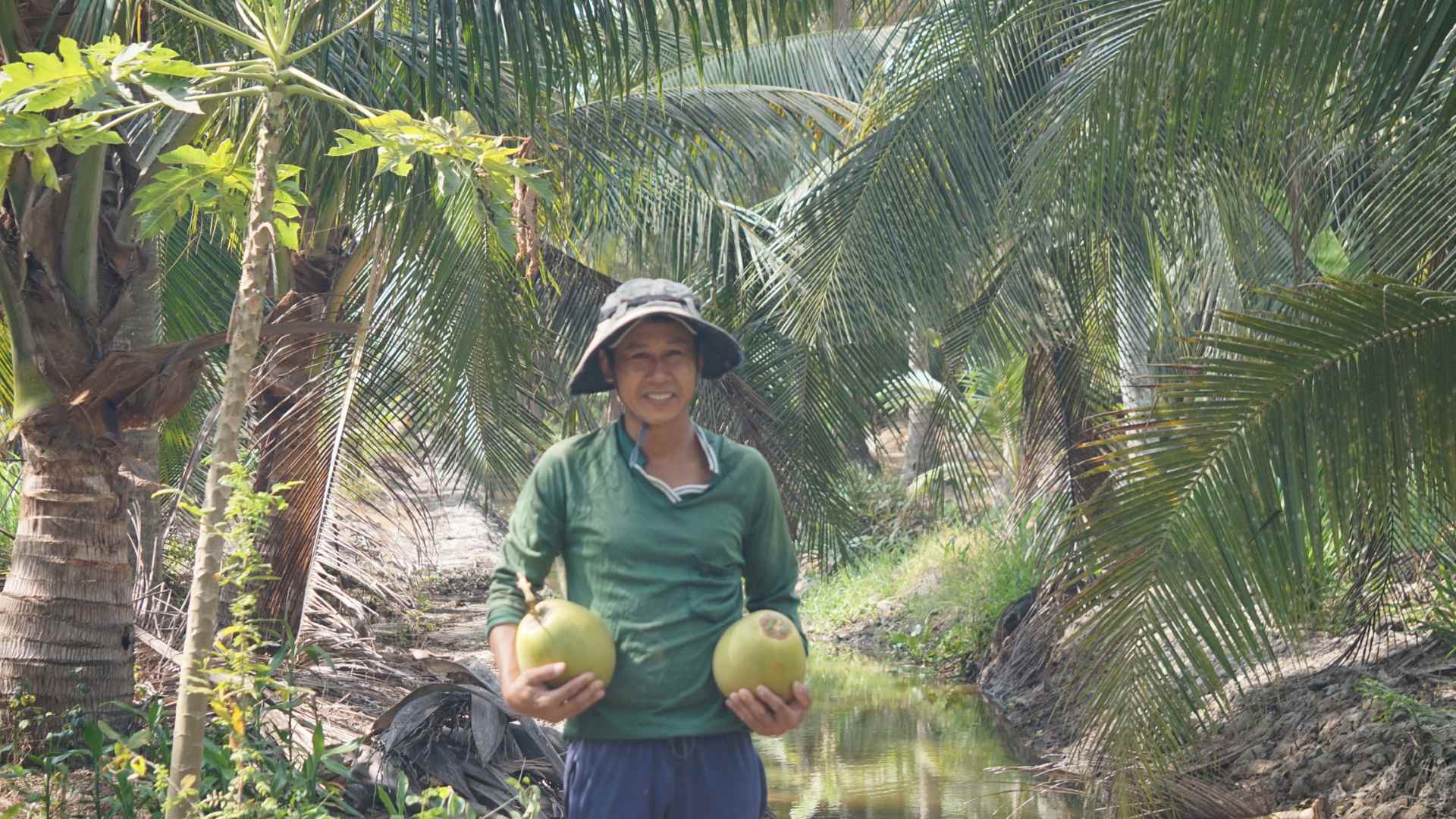
"Although the harvest was not as good as expected, we still have to be optimistic to try harder ." Said Mr. Nguyen Thanh Phong with his coconut garden.
Explaining the decrease in productivity, Mr. Phong said that while the salinity drought caused coconut fruit to have low productivity, the freshwater reserve was not enough because the dry season lasted longer than expected. On average, nearly 2000 fruits per hectare can be harvested per month, but during drought periods, the quantity is reduced by half. Reduced productivity has led to a shortage of coconuts, and despite the high price of coconuts, it is still unable to provide enough coconuts for traders, leading to a situation where the price is good, but the crop is lost. In addition, input costs such as fertilizer and the cost of improving saline soil have once again skyrocketed, making it almost unprofitable for farmers this year.
At present, people in polluted areas are unable to use water for daily purposes such as bathing, hygiene, and laundry because saltwater is highly corrosive and can damage water supply systems and storage equipment.
Moreover, without fresh water, farmers are unable to irrigate fruit trees, crops, and food, resulting in low yields and poor-quality of agricultural products. At the same time, saltwater destroys soil structure, reduces root growth capacity, lowers soil permeability and drainage capacity, and leads to root growth hypoxia. Trees are unable to adapt to saltwater environments, leading to large-scale mortality and causing serious damage to farmers.
Considering this situation, the authorities suggest that people here actively store fresh water, build embankments, dig ditches, and conserve water during prolonged droughts.